

 Refresh
Unbound Grace - Design Project
Want to win a job like this?
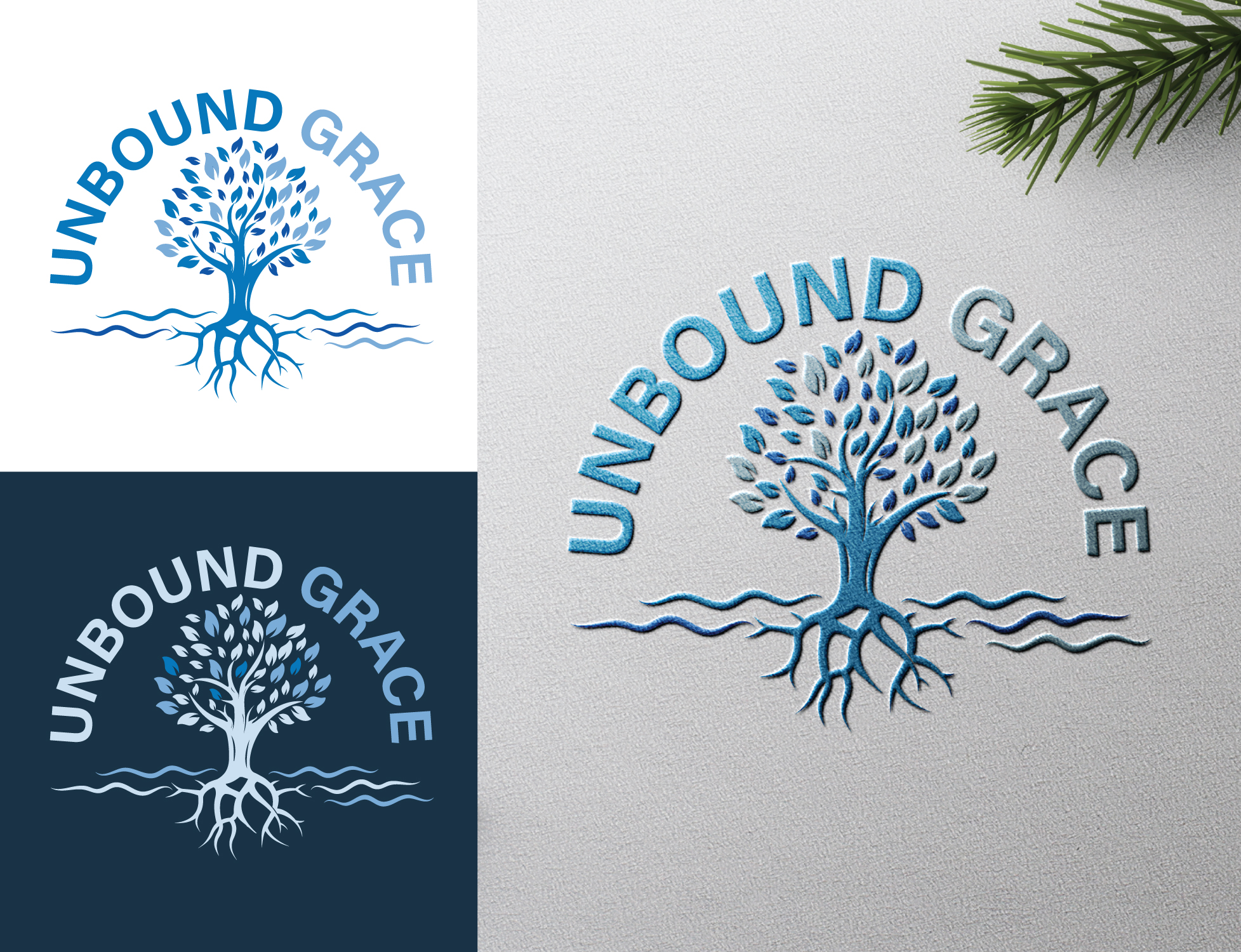
This customer received 45 graphic designs from 11 designers. They chose this graphic design from Impressive Sol as the winning design.
Join for free Find Design Jobs
- Guaranteed
-
 US$160
-
 45 designs
-
 11 designers
Graphic Design Brief
1. Overall Composition: The illustration should depict a single, robust tree. This tree should have a clear division into three distinct parts - roots, trunk, and branches with leaves - each part representing a person of the Holy Trinity in Reformed Christian theology: the Father, the Son, and the Holy Spirit.
2. Roots (The Father):
• Visuals: The roots of the tree should be depicted as strong and extensive, delving deep into the ground. They might be somewhat visible above the soil to emphasize their importance.
• Symbolism: These roots should convey a sense of being the source and foundation of the tree’s life, representing God the Father as the sustainer and originator of all things.
3. Trunk (The Son, Jesus Christ):
• Visuals: The trunk should be prominent, rising powerfully from the roots. It could be depicted with a texture or pattern that suggests both strength and a touch of humanity, perhaps through a slightly humanized texture or form.
• Symbolism: This part of the tree symbolizes Jesus Christ, bridging the gap between the roots (Father) and the branches (Holy Spirit). It should convey the idea of support, connection, and visible presence.
4. Branches and Leaves (The Holy Spirit):
• Visuals: The branches should be reaching outward and upward, with vibrant leaves that suggest life and movement. The leaves might be designed to look like small flames or dove shapes, subtly alluding to traditional symbols of the Holy Spirit.
• Symbolism: These elements represent the Holy Spirit’s role in reaching out into the world and being the active presence in the lives of believers.
5. Unity and Distinction:
• The design should emphasize that all parts of the tree are interconnected and essential to its overall life and health, symbolizing the unity of the Trinity.
• At the same time, each part (roots, trunk, branches/leaves) should be distinct enough to convey their individual symbolism.
6. Color and Atmosphere:
• The color palette should be natural and earthy, with perhaps a touch of ethereal or mystical elements, especially around the branches/leaves section.
• The atmosphere of the illustration should invoke a sense of awe and mystery, in line with the profound nature of the concept it represents.

Updates
Updated details:
1. Overall Composition: The illustration should depict a single, robust tree. This tree should have a clear division into three distinct parts - roots, trunk, and branches with leaves - each part representing a person of the Holy Trinity in Christian theology: the Father, the Son, and the Holy Spirit.
2. Roots (The Father):
• Visuals: The roots of the tree should be depicted as strong and extensive, delving deep into the ground. Maybe somewhat visible above the soil to emphasize their importance.
• Symbolism: These roots should convey a sense of being the source and foundation of the tree’s life, representing God the Father as the sustainer and originator of all things.
3. Trunk (The Son, Jesus Christ):
• Visuals: The trunk should be prominent, rising powerfully from the roots. It could be depicted with a texture or pattern that suggests both strength and a touch of humanity, perhaps through a slightly humanized texture (not white/pale color) or form.
• Symbolism: This part of the tree symbolizes Jesus Christ, bridging the gap between the roots (Father) and the branches (Holy Spirit). It should convey the idea of support, connection, and visible presence.
4. Branches and Leaves (The Holy Spirit):
• Visuals: The branches should be reaching outward and upward, with vibrant leaves that suggest life and movement. The leaves might be designed to look like small flames , subtly alluding to traditional symbols of the Holy Spirit.
• Symbolism: These elements represent the Holy Spirit’s role in reaching out into the world and being the active presence in the lives of believers.
5. Unity and Distinction:
• The design should emphasize that all parts of the tree are interconnected and essential to its overall life and health, symbolizing the unity of the Trinity.
• At the same time, each part (roots, trunk, branches/leaves) should be distinct enough to convey their individual symbolism.
6. Color and Atmosphere:
• The color palette should be natural and earthy, with perhaps a touch of ethereal, especially around the branches/leaves section. Not mystic.
• The atmosphere of the illustration should invoke a sense of awe and mystery, in line with the profound nature of the concept it represents.
Added Wednesday, 20 December 2023
Target Market(s)
Visually appealing. Eye-catching, but still subtle. I plan to use the graphic for a book cover and for some t-shirts
Font styles to use

Colors
Designer to choose colors to be used in the design.
Look and feel
Each slider illustrates characteristics of the customer's brand and the style your logo design should communicate.
Elegant
Bold
Playful
Serious
Traditional
Modern
Personable
Professional
Feminine
Masculine
Colorful
Conservative
Economical
Upmarket
Requirements
Must have
- I'd like to see the use of the image with the root combined with the image of the tree next to the stream of water (the first two attachments).
Nice to have
- Feel free to use the style guide (attachment), but do not feel limited by it.


